The relays
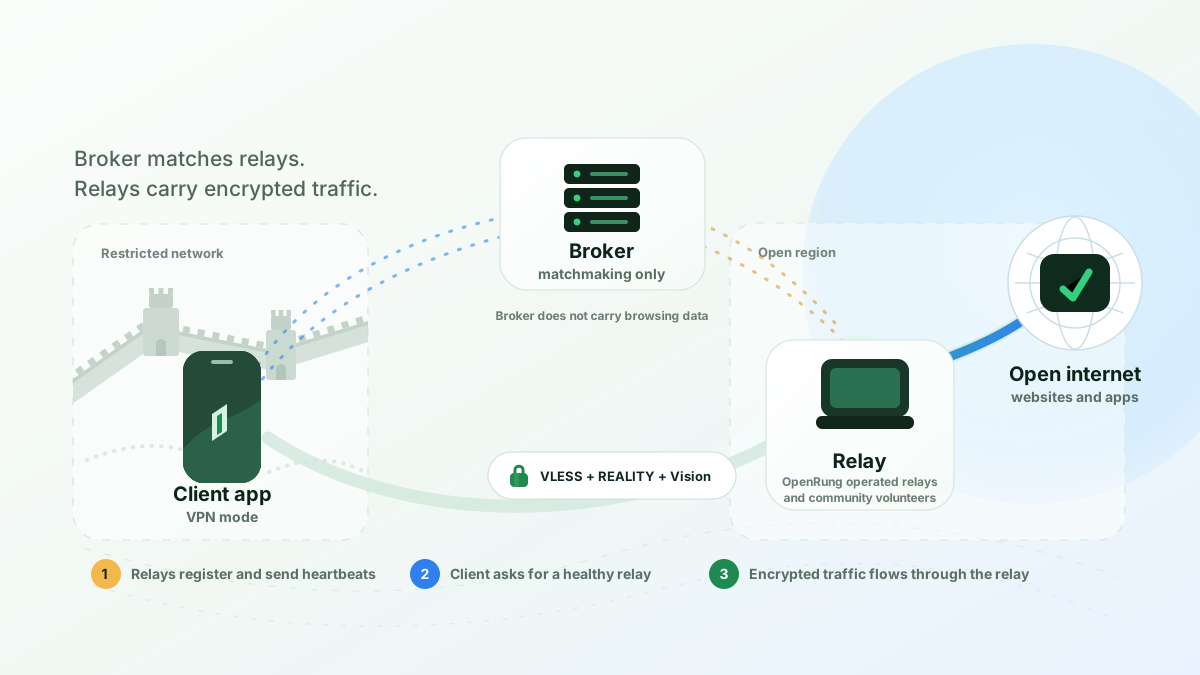
Relays are small servers spread around the world that do one job: accept encrypted traffic from your device and pass it on to the websites and apps you are trying to reach. Some are operated by the OpenRung Foundation; others are run by volunteers who spare bandwidth on a cloud server or a home machine. The more relays exist, the more capacity the network has and the harder it becomes to block them all.
The broker
The broker is the network's matchmaker. Every relay checks in with it regularly, reporting that it is alive and reachable. At startup, your app requests a handful of currently healthy relays from the broker, ranked by real measurements: connection success rate, latency, and speed.
The broker is a control plane only. Your browsing traffic never flows through it, so it cannot see which sites you visit — it only helps your app find a good door.
The connection
Once your app has picked a relay, it connects directly and routes your device's traffic through it, like a VPN. The difference is what the connection looks like from outside: on the wire, an OpenRung session is built to be indistinguishable from ordinary TLS — the same kind of encrypted traffic your browser produces constantly. Censorship systems that try to single it out face an unpleasant choice: let it through, or break the everyday web for everyone.
What OpenRung can and cannot see
Traffic between your device and the relay is encrypted. The broker never carries browsing data. During early-access testing, the apps collect diagnostic connection metadata — described plainly in our privacy policy, with the technical telemetry documentation public on GitHub. We do not sell data, and the network requires no account, phone number, or email.
How it compares
Versus a commercial VPN: A commercial VPN sells access to servers it controls, and its protocols are well-known enough that censors often block them outright. OpenRung makes different trade-offs: sessions imitate ordinary TLS rather than announcing themselves as VPN traffic, the network is free because a nonprofit runs it, and both the client and relay code are public for independent audit.
Versus Tor: OpenRung optimizes for access and speed, not anonymity. Traffic exits through a relay whose address websites can see — much like a Tor exit node, but without Tor's multi-hop design. If your primary need is anonymity rather than reaching blocked sites quickly, Tor is the better tool; the two can also complement each other.